How to Determine Your Property’s Value Before Selling
Determining the right asking price is the most critical step in any real estate transaction. An overpriced property risks stagnating on the market, becoming what professionals call a "burned listing," while underpricing leads to a direct financial loss for the seller. In Quebec, this analysis is based on objective criteria and precise market data, framed by the practices of the Organisme d'autoréglementation du courtage immobilier du Québec (OACIQ). This process aims for a compliant an
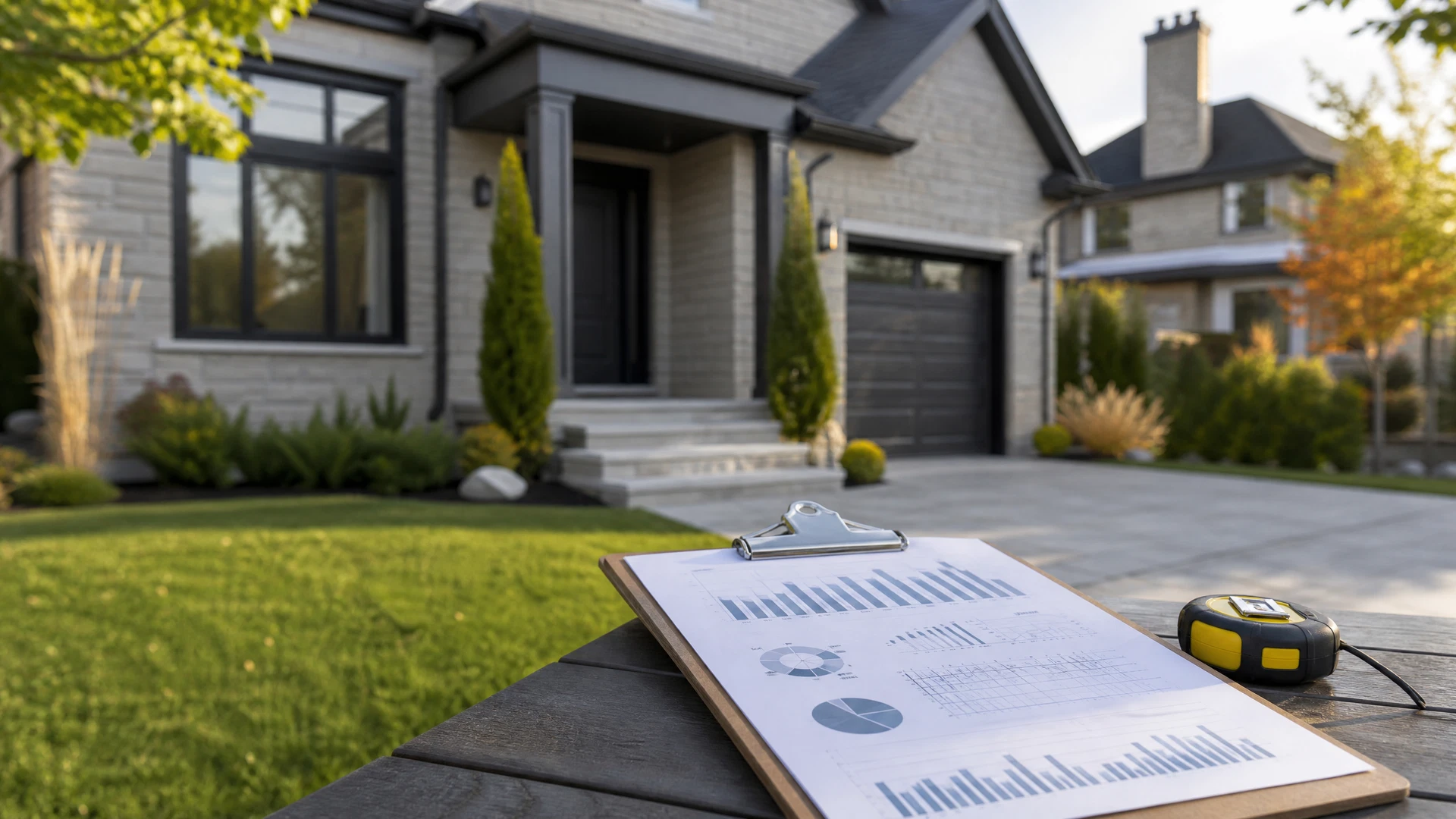
Determining the right asking price is the most critical step in any real estate transaction. An overpriced property risks stagnating on the market, becoming what professionals call a "burned listing," while underpricing leads to a direct financial loss for the seller. In Quebec, this analysis is based on objective criteria and precise market data, framed by the practices of the Organisme d'autoréglementation du courtage immobilier du Québec (OACIQ). This process aims for a compliant and secure transaction, moving away from purely emotional estimates [1].
The Importance of Strategic Value Analysis
Setting a price is not an exact science but a strategic analysis aimed at finding the optimal equilibrium point. The goal is to attract potential buyers while optimizing sale time and obtaining a fair price. According to the OACIQ, real estate brokers have an obligation to advise their clients on market value based on verifiable facts and compelling data [4]. A rigorous evaluation prevents the property from losing its freshness on the market, which could eventually force the seller to accept larger price drops than if the correct amount had been listed from the start.
Distinction Between Municipal Assessment and Market Value
A common mistake among homeowners is to rely solely on their tax bill to set their selling price. It is essential to distinguish between the municipal assessment, used to distribute the property tax burden, and the market value, which represents the most probable price a buyer would be willing to pay in a free and open market. Municipal assessments are based on mass data that does not necessarily reflect the current condition or interior improvements of a specific property [2].
| Characteristic | Municipal Assessment | Market Value |
|---|---|---|
| Primary Objective | Distribution of property taxes by the municipality. | Estimation of the probable selling price between two parties. |
| Update Frequency | Generally triennial (every three years in Quebec). | Updated in real-time according to market fluctuations. |
| Methodology | Mass appraisal based on historical data. | Detailed comparative analysis and current state of the property. |
| Individual Precision | Low (often ignores interior renovations). | High (takes into account every specific detail). |
Professional Value Analysis Methods
To obtain an accurate picture of a property's value in Quebec, experts primarily use three recognized approaches. The choice of method often depends on the type of property and its intended use.
The Comparison Method or Comparative Market Analysis (CMA)
This is the preferred method for residential properties such as single-family homes and condominiums. It involves comparing the target property with similar homes recently sold in the same geographic area. Professionals analyze living space, the number of bedrooms, the year of construction, and the overall condition. Adjustments are then made: for example, if a comparable property has a garage and yours does not, a deduction is applied to the comparable's sale value to establish a fair baseline.
The Cost Approach
This approach is generally used for unique properties, very recent constructions, or locations where comparable sales are non-existent. It is based on calculating the cost it would take to rebuild the building as new, using current materials and standards, from which physical and functional depreciation is subtracted. The market value of the land is then added to this amount.
The Income Approach for Revenue Properties
Essential for multiplexes (Plexes), this method bases the property's value on its ability to generate net income. An investor is not just buying a physical structure but a financial return. The analysis focuses on gross income, operating expenses, and the capitalization rate prevailing in the sector.
Key Factors Determining Market Value
Several factors, both internal and external, directly influence the perception of value by buyers and, by extension, the final transaction price.
"The broker must inform all parties to a transaction of any factor of which he is aware that could adversely affect the parties or the object of the transaction itself." [4]
Location remains the predominant factor. Proximity to essential services, the quality of surrounding schools, access to public transportation, and the quietness of the neighborhood define the foundation of value. Added to this is the condition of major components such as the roof, windows, heating system, and insulation. A well-maintained and "turnkey" property will always benefit from a value premium compared to a property requiring immediate work. It is therefore recommended to prepare your home or condo before selling to maximize its initial appeal.
The Role of Experts in Establishing Price
While many online tools offer quick estimates, they often lack the necessary nuance for a real transaction. They cannot evaluate the quality of finishes, the atmosphere of a neighborhood, or the meticulous maintenance of an owner.
A real estate broker performs a thorough Comparative Market Analysis (CMA). Their exclusive access to actual sales data from the Centris system allows them to see not only the asking prices but, more importantly, the final selling prices and terms of sale. As part of their mandate, they propose a price strategy adapted to the current market context [2].
For more specific needs such as litigation, succession, or divorce, a certified appraiser is the designated professional. Their appraisal report is impartial, rigorously documented, and recognized by courts as well as financial institutions. Unlike a broker, their role is not to sell the property but to provide a punctual and objective opinion of value.
Avoiding Psychological and Financial Traps
It is common for sellers to fall into the trap of sentimental value. Memories attached to a house or personal efforts invested in decoration unfortunately do not add market value in the eyes of a buyer, who perceives the property as an investment or a future neutral living environment.
Furthermore, it is crucial to understand that the cost of renovations does not always translate into an equivalent increase in the selling price. While modernizing a kitchen or bathroom generally offers an excellent return on investment, other more personal or purely aesthetic works may not be valued by the market.
Conclusion
Determining the value of your property is an exercise in realism and rigor. By combining a thorough analysis of comparables, a keen understanding of the local market, and the guidance of a professional, you lay the foundation for a successful sale. Once the price is established, you can proceed to the next steps of the process of selling your property in Quebec. For those who must coordinate multiple transactions simultaneously, such as buying before selling or selling before buying, an accurate estimate is the indispensable foundation of any solid financial planning.
FAQ — Frequently Asked Questions About Real Estate Value
Do all renovations increase the selling price? Not systematically. Maintenance renovations like replacing the roof or windows are perceived as essential to maintain value and reassure the buyer, but they do not always increase the price proportionally to their cost. The most value-adding interventions are generally those that modernize the main living spaces or increase the property's functionality.
Why is my property valued differently from my neighbor's? Several nuances can justify a price difference: a different orientation offering more light, a more fluid interior layout, superior quality of materials used, or the absence of restrictive easements. A detailed comparative market analysis highlights these specific distinctions.
Can I contest my municipal assessment if it seems incorrect? Yes, it is possible to submit a request for review of the property assessment roll to your municipality, generally during the first year of a new roll's filing. However, a municipal assessment, whether high or low, does not dictate the final selling price, which remains determined by the meeting of supply and demand in the open market.
Comparative Market Analysis: Do you want to know the real value of your property in today's market? Request a comparative market analysis today to get a detailed and professional analysis.